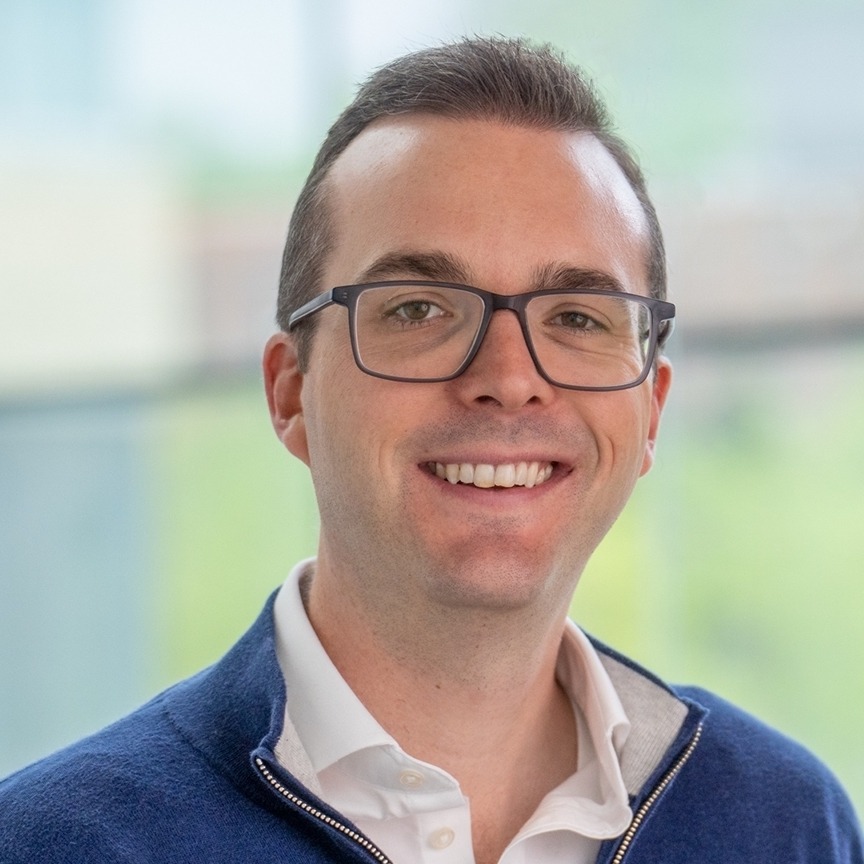
Phillip Compeau

I am a Carnegie Mellon professor who has designed a range of STEM courses to a diverse collection of student groups, an experienced administrator who has built several student-centric academic programs, and a founder of scalable online education projects that have reached over a million learners, including Rosalind, Bioinformatics Algorithms, Biological Modeling, and Programming for Lovers.

I am the principal investigator of a research group studying how AI can transform computing and life sciences education at scale, and I direct two academic programs in the Ray and Stephanie Lane Computational Biology Department.

I completed an MBA in Carnegie Mellon’s Tepper School of Business to expand my management skillset and am excited about new leadership opportunities.

Please use this site to explore my online education projects, read about my experience with teaching and administration, and contact me.

Academic Positions

Education & Training

  • MBA 2024

    Master of Business Administration with University Honors

    Carnegie Mellon University

  • Ph.D. 2014

    Ph.D. in Mathematics

    University of California, San Diego

  • M.A. 2010

    Master of Arts in Pure Mathematics

    University of California, San Diego

  • MASt 2009

    Master of Advanced Study in Mathematics

    University of Cambridge

  • B.S. 2008

    Bachelor of Science magna cum laude with High Honors in Mathematics

    Davidson College

Research Group

I am the principal investigator of a research group in the Ray and Stephanie Lane Computational Biology Department at Carnegie Mellon University, where I am a full voting member of the faculty. My group studies how AI can transform computing and life sciences education at scale. Current projects include an AI-native open courseware platform for the School of Computer Science, an adaptive exercise system and integrated AI-assisted IDE for the Programming for Lovers platform, and a pipeline for converting recorded lectures into open educational video.

I supervise a research group of roughly a dozen undergraduate and graduate student researchers and research staff, and I am the director of two academic programs: the undergraduate major in computational biology, and the PreCollege Program in Computational Biology, which I co-founded and scaled from zero to over 100 students per year.

My published work includes Bioinformatics Algorithms: An Active Learning Approach (with Pavel Pevzner), adopted at over 250 institutions in 50 countries, and research on computational biology education in venues including PLOS Computational Biology. My work has received funding from the National Institutes of Health, the National Science Foundation, and the Howard Hughes Medical Institute, and I am principal investigator or co-investigator on current grant proposals supporting this work.

Honors & Awards

  • 2022
    Herbert A. Simon Award for Teaching Excellence in Computer Science
    Presented annually by the School of Computer Science, this award acknowledges excellence and dedication to teaching by a faculty member in the School of Computer Science. It recognizes a standard of excellence that will long be the legacy of Dr. Simon, a standard worthy of emulation.
  • 2021
    Who's Who in Sciences Higher Education
  • 2020
    A. Nico Habermann Educational Service Award
    Awarded by the Carnegie Mellon School of Computer Science to all spring 2020 instructors who made the semester possible during a move to fully online instruction due to COVID-19.
  • 2010-2014
    Achievement Rewards for College Scientists Fellow
    Awarded by ARCS Foundation, which ``advances science and technology in the United States by providing financial awards to academically outstanding U.S. citizens studying to complete degrees in science, engineering and medical research.``
  • 2008-2009
    W. Thomas Smith Scholar
    Awarded by Davidson College to cover all expenses for an academic year of study at a major university outside the United States (taken for study at Cambridge). The award is analogous to other prestigious postgraduate awards, such as the Rhodes, Marshall, Luce, and Fulbright Scholarships.
  • 2008
    Phi Beta Kappa
    The oldest academic honor society in the United States. Membership is offered only to the top 10% of graduates in about 10% of American colleges.
Page Contents